

Table of Contents
- Why Craftsmanship Matters in Modern Grocery Shopping
- How Shopping Patterns and Consumer Preferences Are Shifting
- How to Identify Authentic Artisanal Food on the Shelf
- How to Choose Artisanal Olive Oil: A Shopper's Checklist
- How to Verify Food Origin Online Before You Buy
- How to Store Olive Oil So Craftsmanship Lasts
- Balancing Craftsmanship With Price and Convenience
- Conclusion
- Frequently Asked Questions
Last Updated: October 21, 2026
Why Craftsmanship Matters in Modern Grocery Shopping
Why craftsmanship matters in modern grocery shopping comes down to one truth: careful production shows up in taste, texture, and shelf life. At Digital Direct Market, we see it daily.
Most shoppers sense that gap but lack a clear way to act on it. Below, we'll show you how to spot real craftsmanship, verify it before you buy, and decide when the extra cost is worth it.
How Shopping Patterns and Consumer Preferences Are Shifting
Shopping patterns have moved toward fewer, better purchases. Many shoppers now trade a full cart of unknowns for a smaller set of trusted items, and younger consumers especially ask where a product came from and who made it.
The reasons are practical, not romantic:
- Time savings: a curated shelf means less label-reading in the aisle.
- Quality expectations: buyers want ingredients they recognize.
- Product distinction: a private label item and a handcrafted one serve different needs.
Online grocery and subscription models make this easier. You can read a maker's story before checkout instead of guessing in a store aisle. Convenience and craftsmanship are no longer opposites.
How to Identify Authentic Artisanal Food on the Shelf
Authentic artisanal food is a product where a named maker controls the ingredients and the process, and can explain both. If a label can't answer "who made this and how," treat the word artisan as decoration. The useful skill is knowing which parts of the label to read, in what order, and what a credible answer looks like.
The four-pass label check
Run these passes in order. Stop at the first one that fails.
- Maker pass. Look for a named producer, farm, cooperative, or creamery, not just a parent company or a "distributed by" line. A maker who puts their name on the front is usually willing to be checked.
- Ingredient pass. Count the ingredients. Short lists with recognizable names are a good sign, but the real test is whether every ingredient has a purpose you can explain. "Natural flavors" is a catch-all; "cultured butter" is a process.
- Process pass. Look for a method word: cold-pressed, stone-ground, small-batch, aged, fermented, hand-rolled, smoked over wood. A process claim is specific and testable. "Premium" and "gourmet" are not.
- Date pass. Find a harvest, production, or pack date, not only a best-by date. Perishable craft products degrade, and makers who care about freshness usually tell you when it was made.
What each category should disclose
Different aisles have different tells. Use these as quick reference points.
- Oils and vinegars: single origin, harvest date, extraction method, and a dark bottle or tin. A blend of countries is not automatically bad, but it is not single-origin craft.
- Cheese and dairy: milk source (cow, sheep, goat), whether it is raw or pasteurized, aging time, and the creamery name. A "farmstead" claim means the maker also raises the animals.
- Coffee and tea: roast date or harvest season, origin region, and processing method (washed, natural, honey). A roast date within the last few weeks matters more than a best-by date months out.
Certifications worth checking
A certification is only useful if you know what it covers. Match the badge to the claim.
- USDA Organic verifies production and handling rules for organic ingredients. It does not verify that a product is artisanal or small-batch.
- Non-GMO Project Verified addresses genetically engineered ingredients. It says nothing about sourcing or process quality.
- Fair Trade Certified focuses on social and environmental standards in supply chains. It is a sourcing claim, not a taste claim.
A product can carry several badges and still be mass-produced. Certifications answer specific questions; they do not replace the four-pass check.
Packaging signals, and their limits
Small producers often use smaller bottles, simpler labels, and darker glass, usually a cost and freshness decision, not proof of quality. Pair packaging with the label checks above; a dark bottle with no harvest date is still just a dark bottle.
A 30-second in-aisle routine
When you are in the aisle with limited time:
- Turn the package over and find the maker name.
- Scan the ingredient list for anything you cannot identify.
- Look for one process word and one date.
- If a certification matters, confirm the certifier is named, not just the seal.
If it fails at step one, put it back. That routine filters out most of the noise faster than reading every word.
How to Choose Artisanal Olive Oil: A Shopper's Checklist
Choosing artisanal olive oil starts with three facts: origin, harvest date, and extraction method.
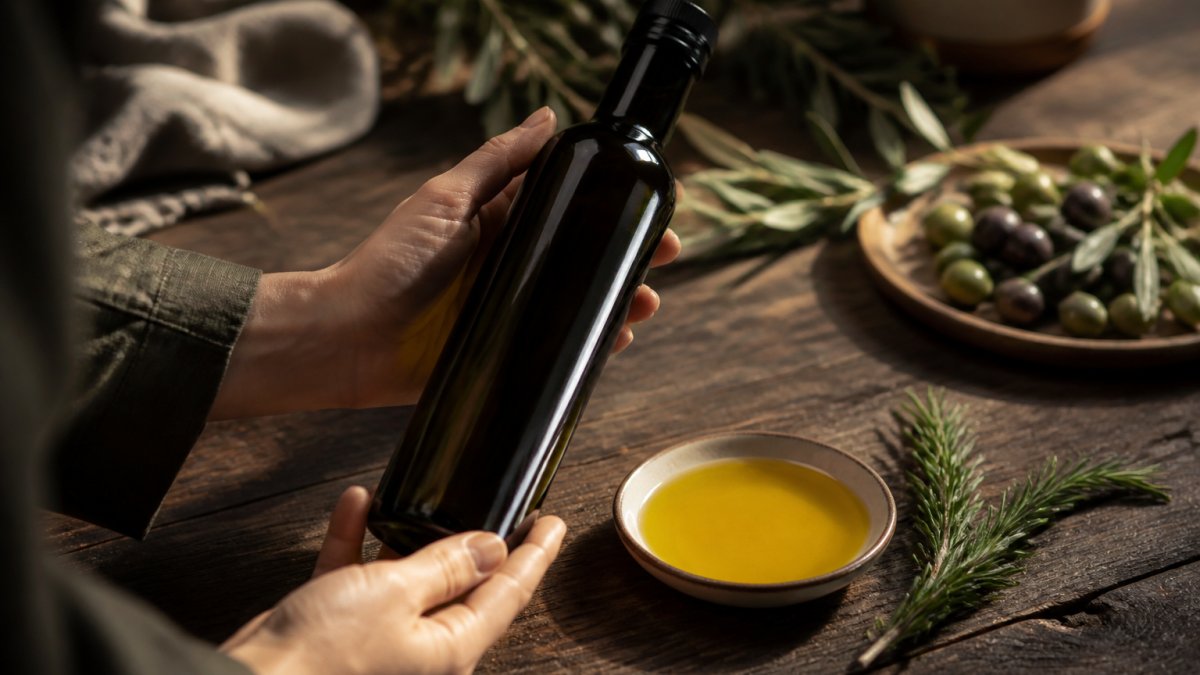
Use this checklist before you buy:
- Single origin stated, not a blend of countries
- Harvest date printed, ideally within the last 18 months
- Cold extraction named on the label
Our DeLallo Organic Extra Virgin Olive Oil meets the first four points directly. It's certified organic, cold-extracted, and 100% Italian, at $18.95.

If polyphenols matter to you, Olivea's High Phenolic EVOO lists 500+ mg/kg, lab-verified per batch, at $35.00. That's a specific, checkable number, which is the point.
How to Verify Food Origin Online Before You Buy
Verifying food origin online means matching the seller's claim to a source you can check yourself. A product page is a claim; a certification lookup or a named producer is evidence.
- Read the product page for specifics. Look for region, producer, and harvest date.
- Check the certifier. Organic and origin claims usually have a searchable registry.
- Look for traceability language. "Traceable from grove to bottle" is a promise you can test.
- Ask the seller directly. A good one answers without hedging.
The USDA National Organic Program publishes the rules behind any organic claim, so you can see what a label actually certifies. The FDA food labeling guidance explains what origin and ingredient statements must include.
DeLallo Organic Extra Virgin Olive Oil | Certified Organic Italian EVOO →
Questions worth asking any seller:
- Who produced this, and where?
- What is the harvest or production date?
- Which certifier signed off, and what is the certificate number?
How to Store Olive Oil So Craftsmanship Lasts
Storing olive oil well means protecting it from light, heat, and air. Good oil fails fast when stored badly, and the loss is invisible until you taste it.
- Store in a cool, dark place, away from the stove.
- Keep the cap tight between uses.
- Buy smaller bottles if you cook slowly.
Our product listings say the same: store in a cool, dark place, away from heat and direct light. That applies to every bottle in our oil and vinegar range, from the $15.99 Rosemary Garlic Herb EVOO to the high-phenolic bottle.

Balancing Craftsmanship With Price and Convenience
Balancing craftsmanship with price and convenience comes down to frequency of use and how plainly you taste the difference. Pay more for items you use daily and taste on their own; save where the difference disappears in cooking or convenience genuinely wins. Here is a framework you can apply in the aisle or on a product page.
The three-question test
Before paying a premium, ask:
- How often will I use this? Daily-use items justify a higher unit price because the cost spreads across many meals. A finishing oil you use three times a week is a different purchase from a specialty vinegar you open twice a year.
- Will I taste the difference plainly? If the product is the star of the plate, dipping oil, a wedge of aged cheese, a single-origin chocolate, craft shows. If it is one of ten ingredients in a braise, the difference narrows.
- Does convenience cost me quality or waste? A pre-cut vegetable or a subscription box can save time, but check whether the convenience premium buys you fresher or better-sourced food, or just packaging and labor.
A practical split by category
Use this as a starting point, then adjust to your own cooking.
| Category | Worth the craft premium | Standard is fine |
|---|---|---|
| Finishing oil, dipping oil | Yes, flavor is the point | , |
| Everyday cooking fat | Sometimes, depends on heat and volume | Yes, for high-heat bulk cooking |
| Cheese for a board | Yes, age and milk source show | , |
| Cheese for melting into a dish | , | Yes |
| Coffee and tea | Yes, roast date and origin matter | , |
| Pantry staples (flour, sugar, salt) | Sometimes, specialty salt for finishing | Yes, for bulk baking |
| Bread | Yes, if eaten fresh | Yes, for toast and crumbs |
| Preserves and sauces | Yes, for gifts and simple meals | Yes, for long-simmered dishes |
The per-use math
A higher sticker price is not the same as a higher cost per use. Compare two bottles of olive oil:
- A $10 bottle you use twice before it goes stale costs about $5 per use.
- A $20 bottle you finish over twenty meals costs about $1 per use.
Craftsmanship often wins this math because better products get used up. The cheap bottle that sits in the pantry is the expensive one. Apply the same logic to cheese, coffee, and bread: the relevant number is cost per serving you actually enjoy, not cost per package.
When convenience should win
Convenience is not the enemy of craftsmanship, it is a trade-off to make deliberately.
- Buy convenience when the task is labor, not judgment. Pre-washed greens, pre-cut squash, and rotisserie chicken save time without pretending to be craft products.
- Buy craft when the task is judgment. Oil, cheese, coffee, and bread reward attention because the differences are real and lasting.
- Avoid convenience that hides quality. A subscription box shipping fragile produce in excessive packaging may cost more in waste than it saves in time.
Craftsmanship as a waste-reduction tool
Better products tend to get finished. A finishing oil you actually use, a cheese you eat before it molds, and a loaf you toast instead of tossing all reduce waste, a budget and sustainability argument at once. The environmental case is strongest when the product is durable, responsibly sourced, and packaged sensibly, and weakest when "craft" is only marketing on a disposable item.
Buy fewer items, buy them from makers who show their work, and let quality carry the meal. That is the model behind our curated selection, and it is why customers rate us 5.0/5. We filter out the noise so you choose between good options, not guess.
Conclusion
The hard part isn't finding artisanal food, it's telling real craftsmanship from good marketing and knowing when the premium earns its place. Start with origin, date, and process. Verify the claims.
At Digital Direct Market, we do that filtering for you. Our marketplace focuses on integrity and craftsmanship, with a curated selection of premium gourmet and wellness staples, a secure checkout, and clear shipping options.
Get started with Digital Direct Market and stock a pantry you can trust.
Frequently Asked Questions
What does craftsmanship mean in grocery shopping?
Craftsmanship in grocery shopping refers to products made with deliberate skill, quality materials, and transparent methods rather than mass-produced shortcuts. It shows up in small-batch production, traceable ingredients, and producers who can explain how an item was made. For shoppers, craftsmanship means paying attention to process and provenance, not just packaging. A bottle of olive oil that lists a single origin, harvest date, and cold-extraction method signals more craft than a generic blend with no traceable source.
How can you tell if an artisanal food is genuinely handcrafted?
Look for specific, verifiable details: a named producer, a short ingredient list, a harvest or production date, and a clear origin. Genuine artisanal food usually explains its process, such as cold-pressed, small-batch, or single-origin. Vague labels like 'gourmet' or 'premium' without supporting detail are weaker signals. You can also check whether the seller publishes sourcing information and answers questions about how the product was made. Consistency across the label, the product page, and the producer's own materials is a strong indicator of authenticity.
What should you look for when buying artisanal olive oil online?
Check the origin, harvest date, extraction method, and polyphenol or acidity details if listed. A single-origin bottle with a recent harvest date and cold-extraction note is a better sign than a vague blend. Look for dark glass packaging, which protects the oil from light. Read the product page for storage guidance and sourcing transparency. At Digital Direct Market, options like DeLallo Organic Extra Virgin Olive Oil at $18.95 and Mr. Papou's Authentic Extra Virgin Olive Oil at $26.99 list origin and production details so you can compare before buying.
How can you store artisanal olive oil to preserve its quality?
Keep olive oil in a cool, dark place away from heat and direct light, and keep the bottle sealed tightly between uses. Dark glass helps, but a closed cupboard is better than a sunny countertop. Heat and light speed up oxidation, which dulls flavor and reduces the qualities you paid for. Buy in sizes you will finish within a few months of opening, and avoid storing oil next to the stove. These steps protect the craftsmanship you chose at the point of sale.