

Table of Contents
- Why Artisanal Pantry Items Belong in Every Kitchen
- Gourmet Pantry Staples That Earn Their Shelf Space
- How to Stock a Pantry: A Practical Framework
- Herb Blends and Seasonings for Everyday Cooking
- How to Choose High-Quality Olive Oil
- Vinegars, Ghee, and Flavor Boosters
- How to Store Specialty Pantry Ingredients
- Are Artisanal Pantry Products Worth the Extra Cost?
- Frequently Asked Questions
Last Updated: October 19, 2026
Why Artisanal Pantry Items Belong in Every Kitchen
The best artisanal pantry items for home cooks solve a specific problem: they make ordinary weeknight food taste like it came from somewhere better. A tin of fresh, fragrant Herbs de Provence does more for a roast chicken than any YouTube technique, and costs less than a takeout dinner.

An artisanal pantry item is a small-batch, carefully sourced ingredient chosen for flavor and provenance rather than shelf life and lowest cost. That distinction matters more than the price tag suggests.
Most guides treat specialty ingredients as gifts or splurges. In practice, the cooks who get the most from them use them daily, the way you'd reach for salt. Below: which items earn their shelf space, how to evaluate them, and how to store them.
Gourmet Pantry Staples That Earn Their Shelf Space
Gourmet pantry staples are the ingredients you reach for weekly, not the ones you save for company. Our test is simple: will you use it at least twice a week?
That filter eliminates most of what fills specialty shelves. What survives is a short, hardworking list:
- A finishing olive oil for drizzling, dipping, and dressing
- A smoky or aged vinegar for glazes, marinades, and pan sauces
- One or two herb blends that cover roasting and grilling
Everything else is optional. A single great herb blend can season chicken, vegetables, fish, and potatoes without four separate jars, the practical case for curation over accumulation.

How to Stock a Pantry: A Practical Framework
Stocking a pantry well is a sequencing problem, not a shopping problem. Most people buy too much at once and watch half of it go stale.
We recommend building in three passes, roughly one month apart:
| Pass | Focus | What to Add | When to Move On |
|---|---|---|---|
| 1 | Core cooking | One olive oil, one vinegar, one herb blend | You've used each at least four times |
| 2 | Range | A second oil or fat, a second blend for a different cuisine | You can name the dish each one is for |
| 3 | Finishing | Infused oil, specialty vinegar, premium salt | Your everyday cooking already tastes good |
The rule that keeps this honest: don't buy pass two until pass one is genuinely in rotation. A pantry is a working tool, not a collection.
Herb Blends and Seasonings for Everyday Cooking
Herb blends are where artisanal quality shows up fastest, because dried herbs lose their volatile oils over time. A fresh blend smells like something the moment you open the tin; a stale one smells like dust.
How to tell a crafted blend from a premium-looking one
The useful skill is knowing what separates a small-batch blend from a supermarket jar with nicer packaging. Four checks do most of the work:
- Whole or coarse-cut ingredients over fine powder. Powders expose more surface area to air and go flat faster. Look for visible leaf, seed, and peel fragments.
- A named ingredient list, not a generic "spices" catch-all. Blends that name each component (and its origin, when stated) are easier to evaluate and usually reflect a maker who is proud of the formula.
- No anti-caking agents or silicon dioxide. These keep blends free-flowing but add nothing to flavor; their presence often signals a blend built for shelf life rather than taste.
Quick sensory test: crush a pinch between your palms and smell. A blend with live volatile oils blooms immediately; a tired one smells like hay or paper. Do this before cooking with a new tin, not after.
What to look for on the label
Ingredient transparency matters more with blends, because blends are where fillers, salt, and sugar hide. Read the first three ingredients: if salt or sugar leads, you're buying a seasoning mix, not an herb blend. Note allergens, celery, mustard, sesame, and gluten-containing grains are common in rubs, before cooking for guests.
Our selection, matched to the job
Our own selection covers the two jobs most home cooks actually need:
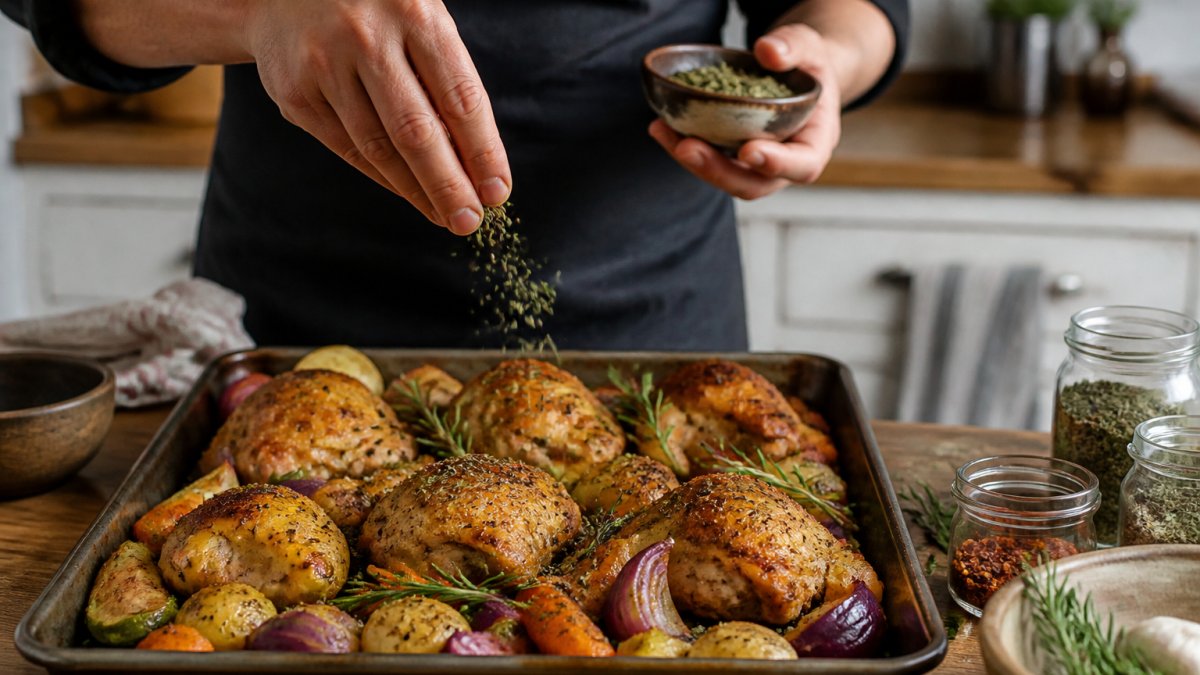
- Herbs de Provence ($11.99, 0.8 oz tin) is the versatile French summertime blend, herbaceous and fragrant. We use it on oven-roasted chicken and vegetables, and it's forgiving enough to season by eye rather than by measure. Pair it with a squeeze of lemon and a drizzle of finishing oil to brighten roasted potatoes.
- Garlic & Herb Seasoning ($11.99, 3.1 oz tin) brings zest, orange peel, and paprika to proteins, roasted vegetables, pizza, and garlic knots. It's the blend to reach for when a dish tastes flat and you can't say why. A pinch stirred into softened butter makes an instant compound butter for steaks or bread.
- Honey & Herb Rub ($11.99, 3.8 oz tin) balances sweet and savory for grilling, roasting, and barbecue, and works as readily on vegetables and pilaf as on fish, chicken cutlets, or pork chops. Because it carries sugar, use it over moderate heat and watch for scorching.
Two blends cover most households; three gives real range without waste. For your first two, pick one bright, herbal blend (Herbs de Provence) and one savory, warming blend (Rosemary & Sage), the widest span of weeknight cooking.

How to Choose High-Quality Olive Oil
High-quality olive oil is defined by three label checks: harvest or production date, origin, and extraction method. Flavor follows from those, not price alone.
Start with the date: olive oil is a fresh product, and a recent harvest outperforms an older, pricier bottle nearly every time. Then look for a named origin rather than a vague regional claim, and for "cold-pressed" or "cold-extracted."
Then match the oil to the job:
Herbs de Provence | Authentic French Herb Blend for Gourmet Cooking →
- Everyday cooking and finishing: Mr. Papou's Authentic Extra Virgin Olive Oil ($26.99, 500 ml) is labeled 100% Greek extra virgin, first cold pressed and produced in Greece. Drizzle it over tomato salads, roasted vegetables, or finished pasta, or whisk it into a dressing with lemon juice or vinegar.
- Organic and certified: DeLallo Organic Extra Virgin Olive Oil ($18.95) is 100% Italian cold-extracted oil, certified organic and non-GMO, which suits health-conscious cooking and everyday use.
- Flavored and finishing: Rosemary Garlic Herb Extra Virgin Olive Oil ($15.99) is infused with rosemary and roasted garlic over a cold-pressed base. Use it for dipping with crusty bread, drizzling over pasta and roasted vegetables, or finishing pizzas and flatbreads.
Vinegars, Ghee, and Flavor Boosters
Flavor boosters change a dish in one step, and vinegar is the most underused. A smoky balsamic does the work of a long marinade in a single drizzle.
Our Balsamic Vinegar - Hickory Smoke ($13.99) brings hickory smoke and balsamic sweetness to glazes, marinades, and finishing drizzles.
Ghee earns its place for a different reason: it brings richness and savory depth without the water content of butter. Herb de Provence Ghee ($13.00) is a clarified butter infused with French herbs, and it stirs into soups and finishes roast chicken and corn on the cob with a comforting, familiar savoriness.
One vinegar and one cooking fat, chosen well, cover an enormous amount of ground.
How to Store Specialty Pantry Ingredients
Storing specialty pantry ingredients well is mostly about three enemies: heat, light, and air. Most spoilage is a storage problem, not a quality problem. The second half is knowing when an ingredient is still worth using.
The storage rules that actually matter
- Oils and vinegars: keep them in a cool, dark place away from heat and direct light. A closed cabinet beats a countertop next to the stove. Heat accelerates rancidity in oils and mutes the aroma of vinegars.
- Herb blends and rubs: seal the tin tightly after each use and keep it away from the steam above the stove. Moisture is what turns a blend into a clump, and clumping is the first sign the tin has been compromised.
- Ghee: a cool, dark spot is sufficient; check the label for any additional guidance. Keep the lid dry and use a clean spoon each time to avoid introducing moisture.
Shelf life and freshness cues
Specialty pantry items are at their best well before any printed date, which is a backstop, not a target. Use these cues:
- Finishing and everyday olive oils: best within roughly 12 to 18 months of the harvest date, and noticeably flatter after the first year. Smell before you drizzle; a waxy or crayon-like note means the oil has turned.
- Herb blends and rubs: peak flavor for about 6 to 12 months after opening. The palm-crush smell test is more reliable than the date on the tin.
- Vinegars: long-lived, but smoky and aged vinegars lose aromatic lift over a year or two once opened. Taste a drop before building a dish around it.
Label reading for allergens and additives
Specialty ingredients aren't exempt from label scrutiny. Blends and rubs may contain celery, mustard, sesame, or gluten; infused oils may carry dairy or nut derivatives; ghee is dairy by definition. Read the allergen statement before cooking for guests, and check whether a flavored oil uses natural flavorings or actual herbs and spices, the latter is usually what you're paying for.
Are Artisanal Pantry Products Worth the Extra Cost?
Yes for items you use often, no for items you don't.
The math works when a better ingredient replaces several lesser ones: one $11.99 herb blend can retire three supermarket jars that each taste like nothing, and a daily finishing oil costs pennies per plate.
A fair way to judge value is cost per use, not sticker price:
- Under $15, used weekly: almost always worth it
- $15 to $30, used weekly: worth it if it's genuinely better than your current option
- Over $30, used monthly: a gift or an occasion, not a staple
That's also why curation matters. At Digital Direct Market, we filter for quality and trusted sourcing so you're not paying a premium for packaging.
Frequently Asked Questions
What are the best artisanal pantry items for home cooks?
Start with items that do the most work in everyday cooking: a quality extra virgin olive oil, a versatile herb blend, a finishing vinegar, and a cooking fat like ghee. These artisanal pantry items add flavor to simple meals without requiring extra steps. From there, add specialty items you will actually use weekly, such as an infused oil for dipping or a smoky balsamic for glazes. The goal is a small set of high-quality staples you reach for constantly, not a crowded shelf of one-off purchases.
Which gourmet pantry staples are worth buying?
The gourmet pantry staples worth buying are the ones you use most often. Extra virgin olive oil, herb blends, balsamic vinegar, and ghee are frequent purchases for home cooks because they improve everyday cooking, not just special occasions. Look for clear sourcing information, short ingredient lists, and packaging that protects freshness. A $15.99 infused olive oil or a $11.99 herb blend earns its place if you use it several times a week. Skip items you would only open once.
How do you choose high-quality olive oil?
Check the label for the harvest date, country of origin, and whether it is cold-pressed or cold-extracted. A bottle labeled 100% Greek or Italian extra virgin olive oil, like Mr. Papou's Greek EVOO or DeLallo Organic Italian EVOO, gives you a specific origin to trace. Dark glass or tin packaging protects the oil from light. Buy in sizes you will finish within a few months of opening, and store the bottle in a cool, dark place away from the stove.
How should you store specialty pantry ingredients?
Store oils and vinegars in a cool, dark place away from heat and direct sunlight, as the product listings for the Rosemary Garlic Herb EVOO and Hickory Smoke Balsamic both recommend. Keep herb blends and rubs sealed in their tins in a dry cabinet. Ghee can be kept in a cool pantry, and refrigeration is fine if your kitchen runs warm. Heat, light, and moisture are the three things that dull flavor fastest, so avoid storing specialty ingredients above the stove or in a sunny window.
Are artisanal pantry products worth the extra cost?
They can be, when the price reflects sourcing and freshness rather than packaging. A $26.99 bottle of first cold-pressed Greek olive oil costs more than a supermarket bottle, but you use it for finishing and dipping where flavor is the whole point. The same applies to a $11.99 tin of fresh herb blend versus a dusty jar that has sat for years. The practical test is cost per use: if a specialty ingredient improves ten meals, the premium per meal is small.
Building a pantry that actually improves your cooking takes a few deliberate purchases, not a full overhaul. If you want a starting point, our gourmet selection is curated for exactly this: fresh, well-sourced herb blends, single-origin olive oils, and flavor boosters that earn their place on the shelf. Shop the Digital Direct Market collection and start with one oil, one vinegar, and one blend. Get started with Digital Direct Market and cook better by next week.